
Introduction
Makkah, also known as Mecca, is undoubtedly one of the most significant and revered cities in the world. Nestled in the heart of Saudi Arabia, it is the birthplace of Islam and the holiest city for Muslims worldwide. In this article, we will embark on a journey through the history of Makkah, tracing its origins, its transformation into a spiritual epicenter, and its ongoing importance to millions of faithful believers.
Ancient Makkah
Makkah's history is deeply rooted in antiquity, with archaeological evidence suggesting that it has been inhabited for thousands of years. The city's origins can be traced back to the ancient Arabian tribes, who settled in the region. By the time of the Prophet Muhammad's (peace be upon him) birth, Makkah had become a bustling trade center with a prominent presence of various tribes and religious practices.
The Birth of Islam
The turning point in Makkah's history came in the 7th century CE when the Prophet Muhammad (peace be upon him) was born within the city's confines. At that time, Makkah was a hub of religious diversity, with a sacred sanctuary known as the Kaaba at its center. The Kaaba, a cube-shaped structure, was revered by many Arabian tribes and used for the worship of multiple idols.
In his early 40s, the Prophet Muhammad (peace be upon him) received divine revelations from Allah (God) through the angel Gabriel. These revelations, now collectively known as the Quran, marked the beginning of Islam. The message was monotheistic, emphasizing the worship of one God and the rejection of idolatry.
The Hijra and the Expansion of Islam
The resistance faced by the Prophet Muhammad (peace be upon him) and his followers in Makkah led to their migration (Hijra) to the city of Madina in 622 CE. This event marked the establishment of the first Islamic community. Over time, the Muslims in Madina grew in strength, and in 630 CE, they returned to Makkah.
The peaceful conquest of Makkah by the Muslim forces marked a transformative moment. The Prophet Muhammad (peace be upon him) cleansed the Kaaba of its idols and reinstated it as a center of monotheistic worship. Today, the Kaaba serves as the focal point of the annual Hajj pilgrimage, drawing millions of Muslims from around the world.
Makkah in Modern Times
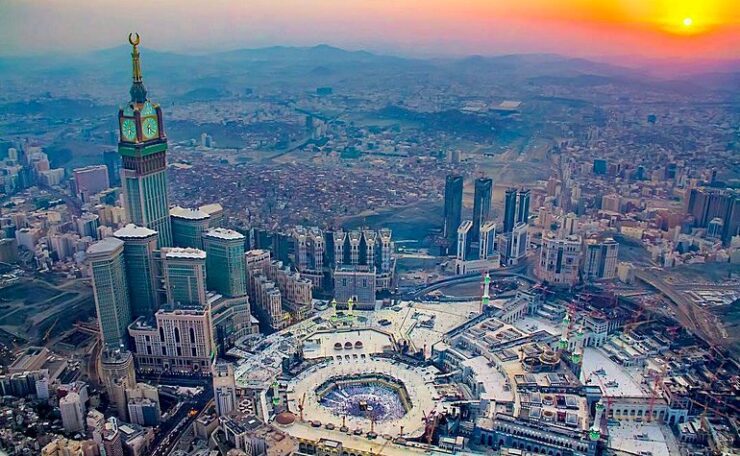
Makkah has continued to evolve as a city, with modern infrastructure and facilities to accommodate the ever-increasing number of pilgrims. The Grand Mosque, or Masjid al-Haram, surrounds the Kaaba and is one of the largest mosques globally, capable of holding millions of worshippers.
In recent years, there have been significant expansions and renovations in Makkah, aimed at improving the experience of pilgrims during the Hajj and Umrah. These developments include the expansion of the Grand Mosque and the construction of high-rise hotels and accommodations.
Conclusion
Makkah's history is intrinsically linked to the birth and spread of Islam. From its ancient origins to its transformation into a global pilgrimage site, Makkah remains a city of profound spiritual significance. It is a place where Muslims from all walks of life come to fulfill their religious duties, find solace, and connect with the rich history of their faith. Makkah's enduring importance underscores its timeless role in the Islamic tradition and its position as a sacred city that continues to inspire believers around the world.