
Sure, here's a fun fact about the Roman Empire: Ancient Romans used a system of numbering that did not include a symbol for zero. The concept of zero as a placeholder in numerical systems was not introduced in Europe until the Middle Ages. This means that calculations and record-keeping in ancient Rome could be more challenging compared to systems that incorporate zero.
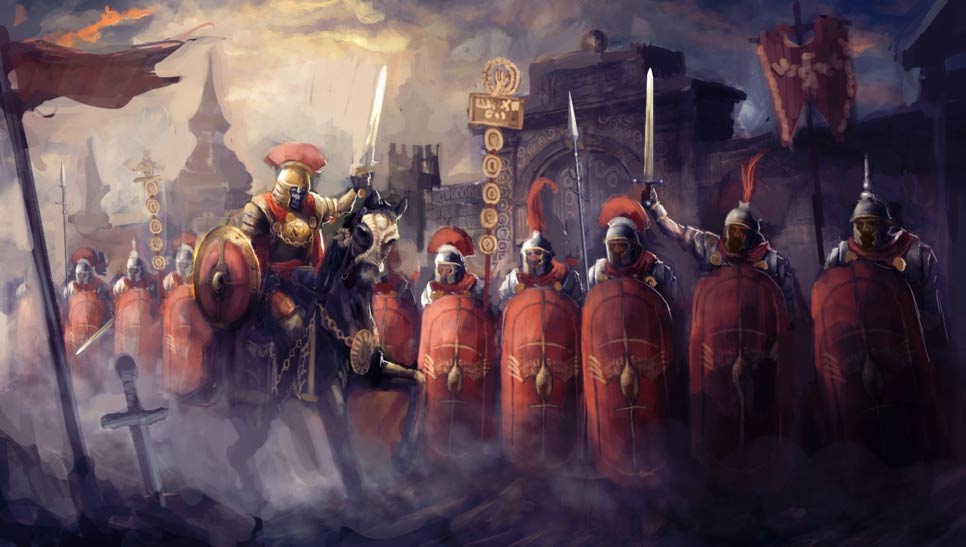
The Roman Empire, renowned for its vast territorial reach and enduring influence on Western civilization, owed much of its success to the formidable military machine that was the Roman Legion. This organized and disciplined force not only conquered lands far and wide but also left an indelible mark on military strategy and engineering. In this exploration, we delve into the intricacies of the Roman Legion, examining its structure, tactics, and the engineering marvels that contributed to its unparalleled success.
I. Legionary Structure:
At the heart of the Roman Legion was its meticulously organized structure. A legion typically consisted of around 5,000 heavily armed foot soldiers, known as legionaries. These soldiers were further divided into smaller units, such as centuries and cohorts, each led by officers responsible for maintaining order and discipline. The Roman military hierarchy was designed to maximize efficiency and adaptability on the battlefield.
II. Weapons and Armor:
The Roman Legionaries were equipped with a formidable array of weapons and armor. The iconic gladius, a short stabbing sword, was the primary weapon, while the pilum, a throwing spear, added versatility to their arsenal. The lorica segmentata, a type of segmented armor, provided excellent protection without sacrificing mobility. The combination of these weapons and armor made the Roman Legionary a formidable force in hand-to-hand combat.
III. Tactical Brilliance:
One of the key strengths of the Roman Legion lay in its tactical versatility. The Romans were adept at adapting their strategies to different terrains and opponents. The famous "Testudo" formation, or turtle formation, involved legionaries interlocking their shields to form an almost impenetrable shell. This tactic was particularly effective against missile attacks and allowed the legionaries to advance steadily.
Additionally, the Romans were masters of siege warfare, employing tactics such as constructing siege engines, ramps, and siege towers. Their ability to breach fortified cities played a crucial role in the expansion of the Roman Empire.
IV. Engineering Marvels:
The success of the Roman Legion was not only attributed to its military prowess but also to the engineering marvels that supported its campaigns. The Romans were adept builders of roads and bridges, enabling rapid movement of legions across vast territories. The famous Roman roads, constructed with precision and durability, facilitated communication and troop deployment.
Roman military engineering also included the construction of fortifications such as Hadrian's Wall in Britain and the limes (frontier fortifications) in Germania. These structures were essential in maintaining control over the empire's borders and protecting against external threats.
Conclusion:
The Roman Legion stands as a testament to the engineering ingenuity and tactical brilliance of ancient Rome. Its disciplined structure, advanced weaponry, and adaptability on the battlefield were key factors in the empire's military dominance. The legacy of the Roman Legion endures in the annals of military history, influencing strategies and tactics for centuries to come.