
Introduction
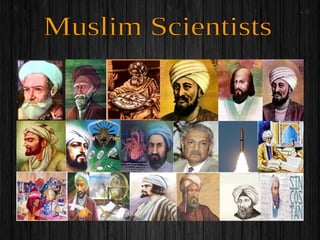
The history of Islamic civilization is replete with remarkable achievements in science, mathematics, medicine, and other fields. Muslim scientists, scholars, and thinkers made significant contributions to human knowledge during the Islamic Golden Age, a period of intellectual flourishing that spanned from the 8th to the 13th century. This article celebrates the achievements and enduring legacy of some of the most influential Muslim scientists in history.
Al-Razi (Rhazes) - The Father of Islamic Medicine
Al-Razi, also known as Rhazes in the West, was a Persian polymath who made substantial contributions to various fields, particularly medicine and chemistry. He is often regarded as the "Father of Islamic Medicine" and is famous for his groundbreaking medical encyclopedia, the "Kitab al-Hawi" (The Comprehensive Book).
Among his achievements, Al-Razi distinguished smallpox from measles, described various chemical substances, and pioneered the use of alcohol in medicine. His works laid the foundation for the development of modern pharmacology and clinical medicine.
Ibn Sina (Avicenna) - The Prince of Physicians
Ibn Sina, known as Avicenna in the West, was a Persian polymath who excelled in various disciplines, including medicine, astronomy, and philosophy. His magnum opus, the "Canon of Medicine," became a standard textbook in European medical schools for centuries.
Ibn Sina's contributions to medicine include the recognition of the contagious nature of diseases, advancements in pharmacology, and his development of the concept of quarantine. His work greatly influenced the practice of medicine in Europe during the Middle Ages.
Ibn al-Haytham (Alhazen) - The Father of Optics
Ibn al-Haytham, often referred to as Alhazen in the West, was a brilliant Arab mathematician, physicist, and astronomer. He is widely regarded as the "Father of Optics" for his groundbreaking work in the field of vision and light.
Alhazen's most famous work, the "Book of Optics," presented a comprehensive theory of vision, which challenged existing Greek theories. His experiments with lenses, mirrors, and the study of refraction laid the groundwork for the development of the modern scientific method.
Al-Biruni - The Master of Observational Astronomy
Al-Biruni was a Persian scholar and polymath who excelled in a wide range of scientific disciplines, including astronomy, mathematics, geography, and anthropology. His work in observational astronomy led to significant advancements in the measurement of the Earth's circumference and the determination of longitude.
Al-Biruni's "Kitab al-Qanun al-Mas'udi" (The Mas'udi Canon) was a pioneering work that summarized the knowledge of his time. His contributions to trigonometry and cartography also had a profound impact on the development of science.
Ibn Rushd (Averroes) - The Philosopher of Andalusia Ibn Rushd, known as Averroes in the West, was a Spanish-Arab philosopher, jurist, and polymath. He made significant contributions to philosophy, particularly in the field of Aristotelian thought. His commentaries on Aristotle's works influenced medieval European scholasticism and had a lasting impact on Western philosophy.
Ibn Khaldun - The Father of Sociology Ibn Khaldun, a North African historian, philosopher, and scholar, is often regarded as the "Father of Sociology." His magnum opus, the "Muqaddimah" (Introduction), laid the foundation for the study of sociology, historiography, and the philosophy of history. Ibn Khaldun's work emphasized the role of culture, economics, and social dynamics in the rise and fall of civilizations.
Al-Farabi - The Second Teacher (after Aristotle) Al-Farabi, also known as "Alpharabius" in the West, was a renowned Muslim philosopher, scientist, and musician. He made significant contributions to political philosophy, ethics, and metaphysics. Al-Farabi's synthesis of Greek and Islamic thought influenced later philosophers, including Avicenna and Averroes.
Ibn Battuta - The Great Traveler Ibn Battuta was a Moroccan scholar and traveler who embarked on an extensive journey across the Islamic world and beyond during the 14th century. His travelogue, "Rihla," provides valuable insights into the geography, culture, and society of the medieval Islamic world and serves as an important historical document.
Al-Zahrawi (Albucasis) - The Father of Surgery Al-Zahrawi, also known as Albucasis in the West, was a prominent Andalusian physician and surgeon in the 10th century. He authored the influential medical encyclopedia, "Kitab al-Tasrif," which included detailed descriptions of surgical instruments and procedures. Al-Zahrawi's work made significant advancements in the field of surgery and was widely used in both the Islamic and European medical traditions.
Ibn al-Nafis - Pioneer of Circulation Theory Ibn al-Nafis, an Arab physician in the 13th century, made groundbreaking contributions to the understanding of the circulatory system. He challenged the prevailing ideas of his time by describing the pulmonary circulation of blood, which foreshadowed the discoveries of William Harvey in the West.
Al-Kindi - The Philosopher of the Arabs Al-Kindi, often referred to as "The Philosopher of the Arabs," was an early Islamic philosopher, mathematician, and scientist. He made significant advancements in various fields, including mathematics, physics, and optics. His work played a crucial role in the translation and preservation of Greek philosophical and scientific texts.
Ibn al-Haytham (Alhazen) - The Pioneer of Optics Ibn al-Haytham, known as Alhazen in the West (mentioned earlier), was a prolific scholar who made significant contributions to optics, mathematics, and astronomy. His work on optics, including the study of refraction and reflection, laid the foundation for the field of optics in Western science.
Ibn Battuta - The Great Explorer Ibn Battuta (mentioned earlier) is celebrated not only for his extensive travels but also for his detailed observations and writings about the cultures, societies, and geographical regions he encountered. His travel accounts provide invaluable insights into the medieval world.
Jabir ibn Hayyan - The Father of Chemistry Jabir ibn Hayyan, also known as Geber in the West, was an early Muslim alchemist, chemist, and philosopher. He is often referred to as the "Father of Chemistry" for his pioneering work in experimental chemistry and his development of laboratory techniques and apparatus.
Ibn Rushd (Averroes) - The Commentator on Aristotle Ibn Rushd (mentioned earlier) made significant contributions to philosophy and is especially known for his commentaries on the works of Aristotle. His influence on European scholasticism and the development of medieval Christian philosophy was profound.
Ibn Qayyim al-Jawziyya - The Scholar of Islamic Jurisprudence Ibn Qayyim al-Jawziyya was a prominent Islamic scholar known for his contributions to Islamic jurisprudence, theology, and spirituality. His writings on Islamic law and ethics continue to be studied and revered within the Islamic tradition.
Ibn Hazm - The Scholar of Comparative Religion Ibn Hazm, an Andalusian polymath of the 10th century, was known for his works on theology, philosophy, and comparative religion. His writings include "The Ring of the Dove," a treatise on love and ethics, and "The Book of Religions and Sects," which explored various religious traditions.
Al-Maʿarri - The Freethinking Philosopher Al-Maʿarri, an Arab philosopher and poet from the 11th century, was a freethinker known for his critical views on religion, ethics, and society. His works, including "The Epistle of Forgiveness," contained satirical and philosophical insights into the human condition.
Ibn Battutah al-Rumi - The Geographer Ibn Battutah al-Rumi was a 14th-century geographer and traveler from Anatolia. His work "Bahriyah" is an important geographical treatise that detailed his explorations of the Mediterranean and Black Seas, providing valuable insights into the geography of the time.
Nasir al-Din al-Tusi - The Great Polymath Nasir al-Din al-Tusi was a Persian polymath of the 13th century known for his contributions to various fields, including astronomy, mathematics, and ethics. His astronomical observations and mathematical works influenced both Islamic and European scholars.
Ibn al-Shatir - The Astronomer and Mathematician Ibn al-Shatir, a 14th-century Syrian astronomer and mathematician, made significant advancements in the field of astronomy. His astronomical models, including improvements to the Ptolemaic system, were groundbreaking for their time.
Ibn Khaldun al-Hadrami - The Historian and Sociologist Ibn Khaldun al-Hadrami (not to be confused with Ibn Khaldun mentioned earlier) was a Yemeni historian and sociologist of the 14th century. His work "Muqaddimah al-Mukhtasar" is considered one of the earliest works on sociology and historiography.
Ibn al-Quff - The Physician and Surgeon Ibn al-Quff, a 13th-century Syrian physician and surgeon, made significant contributions to the field of medicine. His works on surgery and medical ethics were influential in both Islamic and European medical traditions.
Ibn Rushd al-Hafid - The Grandson of Averroes Ibn Rushd al-Hafid, the grandson of the famous philosopher Averroes (Ibn Rushd), was a notable scholar in his own right. He made significant contributions to Islamic philosophy and wrote commentaries on Aristotle's works, continuing the philosophical tradition of his grandfather.
Ibn Tufail - The Philosopher of Hayy ibn Yaqzan Ibn Tufail was an Andalusian philosopher and polymath who is best known for his philosophical novel, "Hayy ibn Yaqzan." This work explores themes of self-discovery, human nature, and the quest for knowledge.
Ibn al-Khatib - The Historian and Physician Ibn al-Khatib was a 14th-century Andalusian historian, poet, and physician. He is known for his extensive historical works, including "Al-Ihata fi akhbar Gharnata" (The Surrounding Area in the News of Granada), which documented the history of Granada.
Al-Zamakhshari - The Linguist and Theologian Al-Zamakhshari was a Persian scholar known for his expertise in Arabic linguistics and Islamic theology. His works on grammar and theology, such as "Al-Kashshaf," are still studied today.
Al-Jahiz - The Pioneering Biologist Al-Jahiz was a prominent 9th-century polymath from Iraq known for his work in biology, particularly in the field of animal behavior. His book "Kitab al-Hayawan" (The Book of Animals) is considered one of the earliest works on natural history.
Ibn Taymiyyah - The Islamic Scholar and Jurist Ibn Taymiyyah was a prominent Islamic scholar and jurist of the 13th and 14th centuries. His theological and jurisprudential works had a significant impact on Islamic thought and continue to influence contemporary Islamic discourse.
Ibn Arabi - The Mystic and Philosopher Ibn Arabi, often referred to as "Ibn al-Arabi," was a 12th-century Andalusian mystic, philosopher, and poet. He is known for his influential works on Islamic mysticism (Sufism), including "Fusus al-Hikam" (The Bezels of Wisdom).
Ibn Jubayr - The Traveler and Geographer Ibn Jubayr was a 12th-century Andalusian traveler and geographer. His journey from Spain to Mecca and back is documented in his travelogue, "Rihla," which provides valuable insights into the medieval Islamic world and the Hajj pilgrimage.
Conclusion
The contributions of Muslim scientists during the Islamic Golden Age played a crucial role in preserving and advancing human knowledge. These scholars' works were instrumental in transmitting the knowledge of antiquity to the medieval world and paving the way for the European Renaissance.
Today, the legacy of Muslim scientists endures as a testament to the power of curiosity, inquiry, and dedication to the pursuit of knowledge. Their achievements serve as an inspiration for scientists and scholars of all backgrounds, emphasizing the importance of intellectual curiosity, critical thinking, and innovation in the quest for understanding the world around us.